 English
 Spanish
 German
 Russian
 Arabic
 Portuguese
 Italian
 French
 Hebrew
 Turkish
Why Some Medical Casters Need Anti-Static
In hospitals, safety and reliability are always the top priorities. Equipment such as hospital beds, medical carts, stretchers, and laboratory machines must move smoothly and safely.
That is why choosing the right medical casters is so important. Among the many types available, one feature that is often required—but sometimes misunderstood—is anti-static casters. Why do some hospitals specifically ask for anti-static medical wheels? What problems do they solve? This article explains everything in a clear and simple way.
What Is Static Electricity and Why Is It a Problem?
Static electricity is the electric charge that builds up when two surfaces rub together. In daily life, you may feel a small “shock” when touching a door handle. In a hospital, this small spark can cause serious risks. Many medical devices are sensitive to electrical interference. Even a tiny spark can affect readings, damage electronics, or cause failures in equipment.
Static electricity can also attract dust and bacteria. This is dangerous in cleanroom areas, ICU rooms, operating rooms, and laboratories where hygiene must be controlled at a very high level.
For these reasons, anti-static solutions are necessary in many parts of the hospital.
How Anti-Static Medical Casters Work
Anti-static medical casters are designed to reduce or eliminate static charge. They are made from conductive or semi-conductive materials that allow electricity to safely discharge into the ground. This prevents sparks, protects electronics, and keeps the environment safe.
Hospitals use them wherever sensitive devices are moved around frequently. These casters help maintain accurate medical equipment performance and ensure patient safety.

Where Anti-Static Casters Are Used in Hospitals
Hospital Bed Casters
Some hospital bed casters use anti-static tread materials to prevent sparks when the bed is moved. This is especially important around oxygen equipment and in ICU or emergency rooms.Medical Carts
Medical carts that carry diagnostic tools, patient monitors, and laboratory devices often require anti-static casters to avoid interference with electronic signals.Laboratory Equipment
Labs use highly sensitive machines. Anti-static wheels help protect testing accuracy by reducing electrostatic discharge.Operating Rooms
In an OR, even a single spark can create safety concerns. Using anti-static medical casters helps maintain a controlled, safe environment.
Benefits of Anti-Static Medical Casters
1. Protect Electronic Equipment
Modern hospitals rely heavily on electronics. Anti-static casters prevent electrostatic discharge (ESD), protecting devices such as monitors, ventilators, and surgical equipment.
2. Improve Safety
Anti-static wheels help avoid sparks that might be dangerous near oxygen tanks or flammable medical chemicals.
3. Reduce Dust Attraction
Static electricity attracts dust and small particles. Anti-static casters help keep equipment cleaner, supporting hospital hygiene requirements.
4. Improve Stability and Movement
High-quality anti-static medical casters still offer smooth and quiet rolling, even while controlling electrical charges.
Central Locking Casters and Anti-Static Features
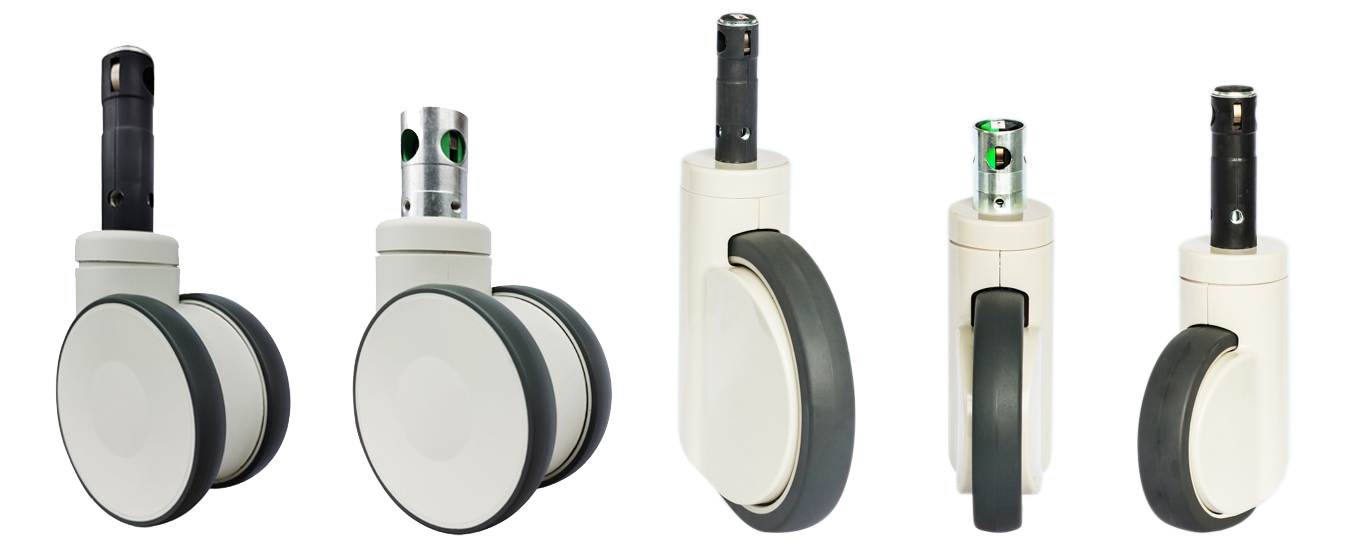
Many hospital beds today use central locking casters, which allow caregivers to control all wheels with a single pedal. This makes beds safer and easier to handle. Some central locking systems also come with anti-static options.
Combining a central locking caster system with an anti-static wheel gives hospitals two major benefits at once:
Secure braking and safety control
Electrical discharge protection
This combination is especially popular for ICU beds, emergency trolleys, stretchers, and high-end medical carts.
Choosing the Right Anti-Static Medical Casters
When selecting casters, hospitals and manufacturers should consider:
Electrical resistance range (semi-conductive or fully conductive)
Load capacity to support the weight of the bed or equipment
Wheel material (TPR, PU, conductive rubber, etc.)
Locking type (single brake, total lock, or central locking casters)
Rolling smoothness and noise level
Cleaning and sterilization requirements
Choosing a trusted supplier is important because consistent quality is critical for medical applications.
-------
Anti-static features on medical casters are not just an optional upgrade—they play a key role in hospital safety and equipment reliability. From hospital bed casters to laboratory carts and central locking caster systems, anti-static wheels help prevent sparks, protect electronics, reduce dust attraction, and maintain a clean and safe medical environment.
For hospitals and manufacturers looking to improve equipment reliability and patient safety, choosing the right anti-static casters is a smart, long-term investment